Everything You Need to Know About Line Marking Standards NSW
There is a reason road line markings look familiar no matter where you drive in New South Wales, and that reason comes down to line marking standards NSW professionals and road authorities are required to follow.
The arrows, edge lines, pedestrian crossings, disabled parking bays, and no-stopping zones are not designed independently by councils, contractors, or property owners. They follow established standards that create a consistent language across roads, car parks, industrial sites, schools, and public spaces.
That consistency is what makes line marking effective. People can make decisions quickly because they already understand what the markings mean.
For organisations responsible for maintaining these environments, compliance is not simply about putting paint on asphalt. It means ensuring markings meet the relevant standards for visibility, durability, layout, and safety. Getting it right improves traffic flow, reduces risk, and helps avoid costly compliance issues later.
In this article, we'll walk you through the line marking standards used throughout NSW, why they are essential, and how they apply across different types of sites. Whether you are a property manager, contractor, or road authority, staying informed helps you stay compliant and keep the people on your premises safe.
What Are NSW Line Marking Standards Based On?
Road line marking standards in New South Wales are grounded in AS 1742, the Australian Standard for the Manual of Uniform Traffic Control Devices. It is an Australian Standard that also serves as the primary traffic control reference across urban areas and rural environments alike. This standard provides the national framework for the design, installation, and maintenance of road line markings in Australia.
In addition to AS 1742, NSW-specific requirements are detailed in Transport for NSW document TS 05462:1.0, which sets out requirements for design, traffic, and maintenance engineering practitioners covering roadway delineation systems and pavement marking.
Where AS 1742 and TS 05462 are supplemented by Austroads research, including the national pavement marking specification project (AP-R578-18), practitioners gain additional guidance on best practice across different jurisdictions, though AS 1742 and TS 05462 remain the primary compliance references. The development of a harmonised national pavement performance specification has been on the Austroads agenda for several years, with the aim of bringing road agency practice into closer alignment across all states and territories.
For car parks and private property, AS 2890 governs parking layout, bay dimensions, and accessibility zone placement. Together, these standards form the compliance backbone for any professional line marking job in NSW.
Why Compliance Matters
Pavement markings are a key element of safe system infrastructure and are essential to road safety for all road users when maintained correctly. They also carry significant consequences when they fall short. Non-compliant or degraded markings remove the visual cues that drivers and pedestrians rely on to navigate safely, increasing the likelihood of collisions, confusion, and workplace incidents.
For property managers and businesses, the stakes are equally practical. Adhering to NSW line marking standards helps avoid legal liabilities, minimises risks, and keeps your facility operationally efficient. Failing to maintain road line markings that comply with the relevant Australian Standard can expose site owners to fines, insurance complications, and liability in the event of an accident. For example, a car park with faded or missing accessibility markings is in direct breach of AS 2890 and can attract enforcement action. Road authorities conduct regular audits against these standards, and non-compliant sites can face enforcement action, remediation requirements, and risk losing access to government and council contracts.
Investing in compliant road line marking is not just a regulatory obligation. It is a proactive step towards safeguarding your facility and everyone who uses it.
Types of Pavement Markings & Their Applications
NSW standards cover a wide range of road line markings, each intended to serve a specific purpose on roads and within managed sites. Knowing what each marking is intended for is the first step in applying them correctly.
Longitudinal markings run along the direction of travel and include:
- Centre lines — must be white and separate opposing traffic flows
- Lane lines — divide traffic travelling in the same direction
- Edge lines — indicate the boundary of the travelled path, must be continuous, and can be either white or yellow depending on the application
- Wide centreline treatments — used on rural roads to reduce head-on collision risk by providing additional buffer between opposing lanes
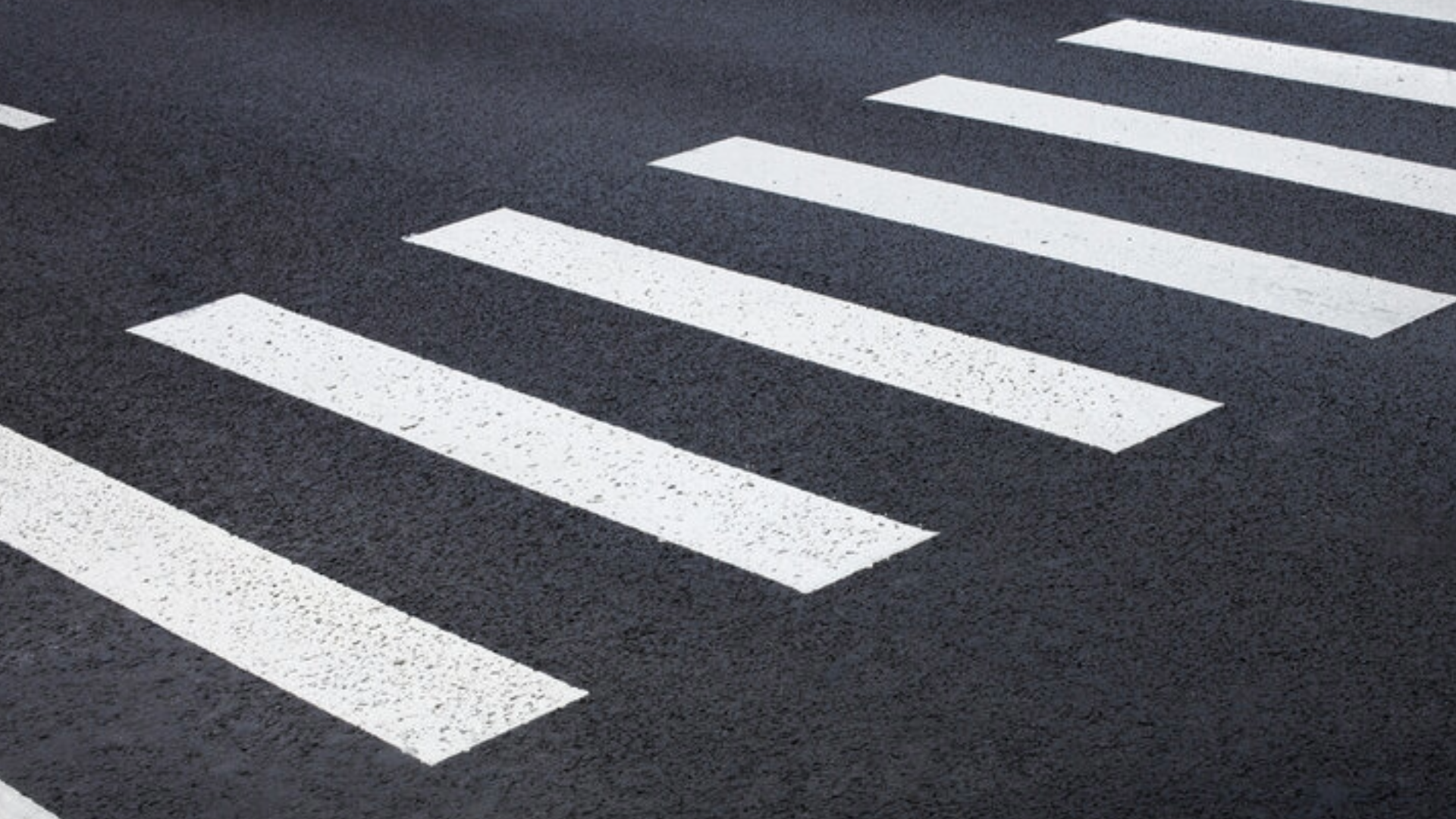
Transverse markings and symbols cut across the direction of travel and include pedestrian crossings, stop lines, give way lines, and painted directional arrows. These, along with other pavement markings such as painted islands and keep clear zones, are governed by the same Australian Standard framework and must respect the dimensional and colour specifications set out therein.
Painted islands and keep clear markings manage traffic flow at intersections and driveways. Keep clear markings prevent vehicles from blocking entry and exit points, while painted islands channel traffic through complex layouts. Together, these other pavement markings play a critical road safety role that is often underestimated.
Dragon's teeth are painted triangles arranged in pairs on either side of a lane, alerting drivers to speed limit changes in school zones and other transition areas.
Rumble strips are raised elements placed on or near edge lines or dividing lines that provide physical and audible feedback to drivers drifting from their lane. Their placement and design are subject to approval processes under NSW guidelines, particularly where enhanced delineation devices are being considered.
Dividing Lines & Edge Line Rules
Single broken dividing lines permit overtaking where sight distance and conditions allow. Single unbroken dividing lines prohibit overtaking and must be placed where passing is unsafe. Double dividing lines, combining a broken and unbroken line, restrict overtaking to one direction only and are used where conditions are asymmetric.
Edge lines are among the most essential road line markings on roads without kerbing. Their placement must reflect the actual edge of the travelled path and they must remain continuous to be effective. Where kerbside restrictions apply, such as no stopping or no parking zones, kerbline markings provide the visual enforcement layer that supports signage.
Design Dimensions, Colours & Marking Widths
The standards for NSW line marking cover line width, colour, spacing, and material durability in specific detail. It is worth noting that there are variations in road agency practice with respect to longitudinal and transverse line widths, which is part of why a consistent Australian Standard is so important to ensure compliance across different sites and road types. Standard line widths vary by marking type and road classification, and broken line segments follow set length-to-gap ratios depending on posted speed.
Colour rules are clear: centre lines are white, edge lines are white or yellow, and specific applications such as bicycle lanes carry their own colour treatments. Getting these dimensions and colours right is not a matter of estimation. It requires trained operators with calibrated equipment working to documented specifications.
Materials, Retroreflectivity, and Performance
Material selection is one of the most consequential decisions in any line marking job. The standards require that materials meet performance criteria for durability and retroreflectivity, with thresholds that vary based on road speed and classification.
Durable materials for road marking include thermoplastic and cold-applied plastic, both of which offer superior longevity on high-traffic surfaces. Reflective glass beads are incorporated into road markings to enhance night-time visibility, a critical safety feature on unlit or rural roads. For car parks, water-based acrylic remains the industry standard due to its durability and low environmental impact. In warehouse and industrial settings, epoxy-based paint is widely used for its longevity and resistance to chemicals and heavy equipment traffic.
Where accelerated wear performance criteria apply — as required for certain high-traffic or heavy vehicle routes — materials must be tested and certified to the relevant specification before use. Road authorities in New South Wales regularly inspect road line markings and pavement markings more broadly to verify that they remain visible, reflective, and in good condition over time. All materials used must comply with the relevant performance specification for the site type and speed environment.
Surface Preparation and Installation
Proper installation begins well before a single line is painted. Technicians evaluate the substrate, whether asphalt or concrete, along with any existing markings and local safety mandates that apply to the site.
The surface must be completely free of dirt, moss, chewing gum, oil, and debris before application. Electronic moisture meters are used to verify that substrate moisture is below 6%, and ambient temperatures must fall between 10°C and 35°C with humidity under 85% throughout the process. Falling outside these parameters risks blistering, peeling, and premature failure of the markings.
Line marking application outside these conditions is not just poor practice. It is a direct path to non-compliance and early deterioration.
Inspection, Maintenance, and Intervention
Compliant line markings are not a set-and-forget outcome. Regular inspections are necessary to verify that markings remain visible, reflective, and structurally sound. NSW guidelines set intervention levels that trigger remarking, thresholds below which markings are considered inadequate and must be addressed.
Routine maintenance activity should be recorded and tracked against lifecycle replacement schedules. Road line markings that fall below intervention thresholds must be prioritised for remarking to maintain the pavement markings across the site in a consistently compliant condition. For road authorities and facility managers alike, this recordkeeping is both a compliance requirement and a practical tool for budgeting and planning future remarking cycles.
Compliance, Enforcement, and Procurement
Non-compliance with NSW line marking standards is not a minor administrative issue. It is a safety and liability exposure that road authorities and facility managers are increasingly held accountable for. Standards audits are conducted on both public roads and private sites, and contractors working on regulated infrastructure must demonstrate competence and operate equipment that meets specification requirements. When working on government or council projects, they are typically required to satisfy additional prequalification criteria set by the procuring agency.
When procuring line marking services — whether you are looking for Wollongong line marking solutions or managing a site anywhere across NSW — always verify that your contractor works to current AS 1742 and TS 05462 requirements, carries public liability insurance, and can provide documentation of materials used. A contractor who cannot produce this information is one who puts your compliance at risk.
Working with a Professional Line Marking Service
Understanding the standards is one thing. Applying them correctly, consistently, and on schedule requires experience, the right equipment, and genuine familiarity with NSW requirements. In conclusion, the difference between a compliant site and a liability exposure often comes down to the contractor you choose.
Professional line marking services can advise on materials, spacing, and layouts suited to your specific environment, whether that is a busy arterial road, a multi-storey car park, a school playground, or an industrial warehouse. Attempting to manage compliance without professional input is where mistakes happen, and in line marking, mistakes carry real safety and legal consequences. The right contractor brings not just technical skill but the accountability and documentation that compliance demands.
Get Compliant Line Marking in Wollongong and Beyond
At KNK Line Marking, we bring over 20 years of experience, RTA-approved materials, and a thorough working knowledge of NSW line marking standards to every project we take on. From roads and car parks to schools, warehouses, and public infrastructure, our team delivers precise, compliant, and long-lasting results across Wollongong, the Illawarra, Shoalhaven, Southern Highlands, and Greater Sydney.
Do not leave compliance to chance. Contact the KNK team today for a free on-site quote and find out how we can bring your markings up to standard, the first time, every time.
KNK Line Marking offers professional line marking services across Wollongong, the Illawarra, and the surrounding areas. Projects include car parks, factories, warehouses, schools, and roads.

Thanks for reading this blog post.
If your site is due for a refresh, KNK Line Marking is Wollongong's trusted line marking crew, servicing car parks, warehouses, schools, roads, and more. We'd love to help.